 Save
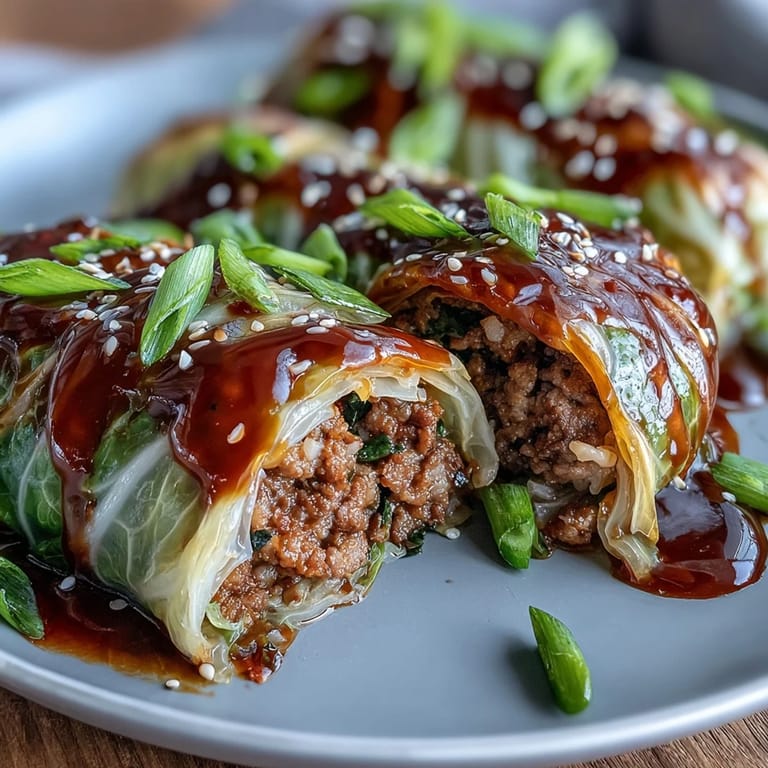
Save The first time I made Korean cabbage rolls, I was answering a craving for something savory but bright, secretly hoping to beat takeout at its own game. The smell of garlic and ginger hit the pan, and suddenly my kitchen felt like a busy Seoul street market, not a quiet Tuesday night at home. Watching those pale cabbage leaves turn pliable in their bath of hot water always feels oddly satisfying. Trying out a new filling mix, I found myself adjusting spice levels between taste tests with a grin—my lips tingling after a little too much gochujang. You never quite know if theyll hold together until you peel back the steamer lid in a cloud of aromatic warmth.
One chilly evening, I made a double batch for friends, filling my tiny apartment with laughter and lots of steam—everyone hovered around the table, watching the rolls disappear faster than I could plate them. Someone suggested we pile the leftovers into lettuce wraps, and we ended up making a new tradition on the spot. Even my roommate, who claims to dislike cabbage, asked for seconds after drowning his in dipping sauce. I realized then these little parcels have a way of turning skeptics into fans. Sometimes the best memories are created by the second helping.
Ingredients
- Napa cabbage: Pick a firm head—the leaves should be unblemished, wide, and flexible for easy rolling.
- Ground beef: A flavorful base; leaner beef yields lighter rolls, but dont go too low fat or theyll dry out.
- Green onions: Their crispness brings freshness to the beef mixture.
- Garlic: Grate it fine for even flavor; minced too coarse and it can overpower the filling.
- Carrot: Adds just a touch of texture and subtle sweetness that rounds out the spice.
- Fresh ginger: Brings heat and depth—peel and grate just before mixing for max aroma.
- Gochujang: This Korean chili paste is the backbone of the dish; start with less if youre spice-shy, then build up.
- Soy sauce: Choose one with rich, savory flavor to balance the sweetness and heat.
- Sesame oil: Just a splash brings irreplaceable nutty aroma, so drizzle it over at the last moment too.
- Sugar: Even a small amount tempers the spice and sharp edges in the filling.
- Black pepper: Cracked fresh for best tastes; dont skip as it adds warmth.
- Toasted sesame seeds: For crunch and a finishing flourish; toast just before garnishing for best effect.
- Soy sauce (for dipping): Salty and savory, provides a punch for the dipping sauce.
- Rice vinegar: Gives the dipping sauce tang—taste and adjust to your liking.
- Gochugaru: Korean chili flakes offer gentle heat and that iconic color in the sauce.
- Sesame oil (for dipping): It makes the sauce glossy and irresistible.
- Honey: Balances the vinegars sharpness; more complex than sugar here.
- Garlic (for sauce): A fresh bite in every dip.
- Toasted sesame seeds (for sauce): The final touch for a bit of crunch and fragrance.
Tired of Takeout? 🥡
Get 10 meals you can make faster than delivery arrives. Seriously.
One email. No spam. Unsubscribe anytime.
Instructions
- Prep the cabbage leaves:
- Boil a big pot of water and gently ease the leaves off the head—watch the color turn vivid and soften, then cool fully under cold water and pat dry.
- Mix the filling:
- Combine ground beef, green onions, garlic, carrot, ginger, gochujang, soy sauce, sesame oil, sugar, pepper, and sesame seeds in a big bowl—roll up your sleeves and mix gently with your hands so every bite gets flavor.
- Roll them up:
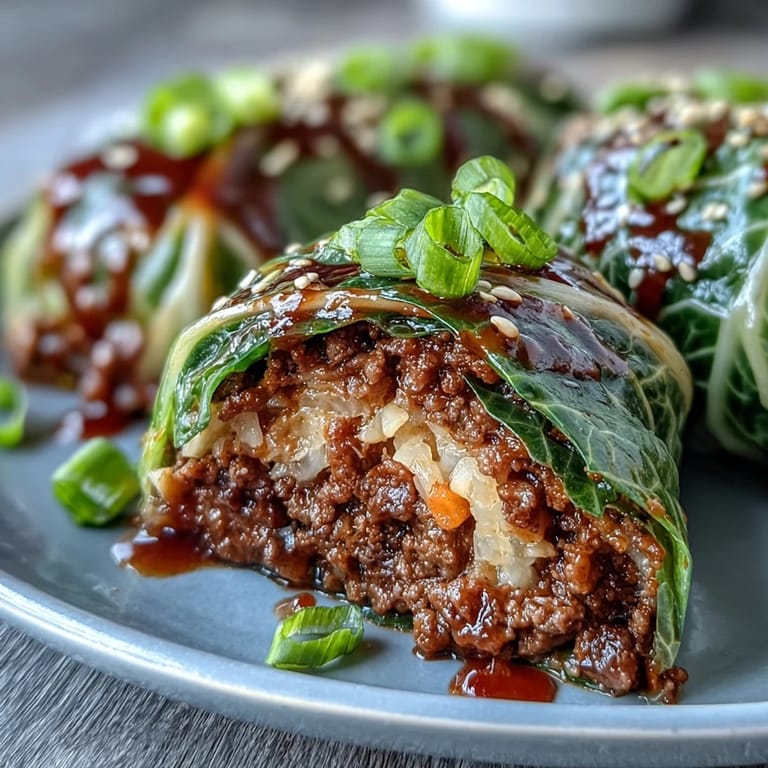
- Lay a cabbage leaf on your board, mound on a few spoonfuls of filling, and tuck the sides snugly—rolling tight but not so hard you tear the leaf; treat each one like a little present.
- Steam to perfection:
- Place rolls seam-side down in a steamer basket and let the gentle heat work for 15–20 minutes—youll see the fat bubble slightly and the kitchen get steamy and fragrant.
- Whip up the dipping sauce:
- Mix soy sauce, rice vinegar, gochugaru, sesame oil, honey, garlic, and sesame seeds, tasting and adjusting as you like; let the flavors meld for a few minutes.
- Serve and enjoy:
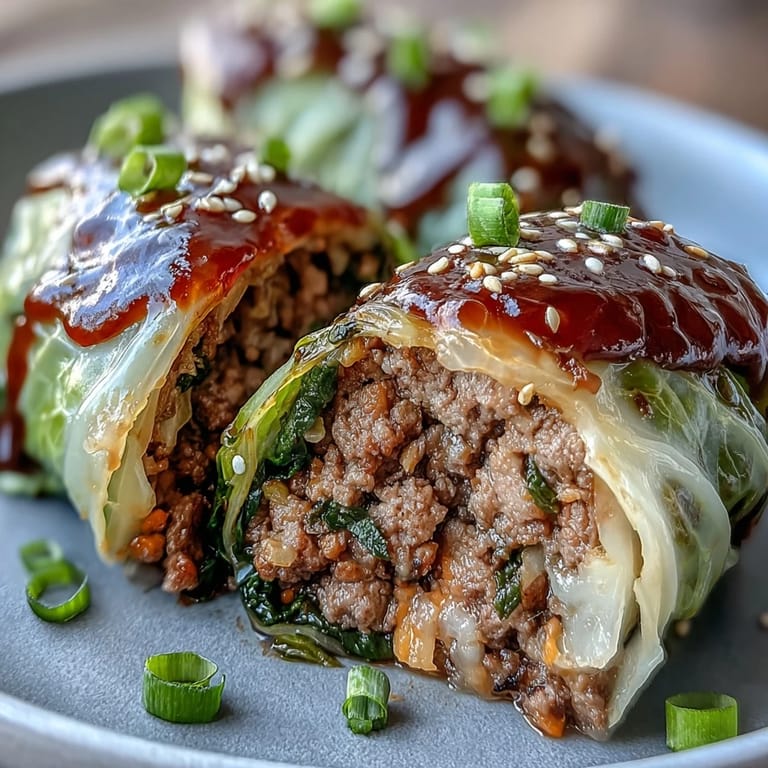
- Lift the rolls onto a platter, sprinkle with sesame seeds or more green onion, and present with dipping sauce on the side—the first bite will have a gentle crunch followed by a rush of warmth and umami.
 Save
Save The first time these rolls impressed my family, it wasnt even intentional—I brought leftovers to lunch and the aroma drew coworkers into my office, everyone eager for a taste. One bite and the lunchroom was full of chatter about favorite comfort foods from home. For a moment, the simple cabbage roll brought us together across cultures. Food like this turns ordinary days special without trying too hard.
Make-Ahead and Storage Advice
If you want to get a head start, you can roll up the cabbage parcels the night before and store them covered in the fridge. They actually seem to hold together a bit better after resting overnight. Steaming from cold takes just a few extra minutes. The dipping sauce can be mixed ahead as well—just stir before serving if it separates.
When to Adjust the Spice
Not everyone can handle full-strength gochujang, so I always keep extra cabbage leaves on the side for a second roll with less filling for kids or spice-averse friends. Youd be surprised how much variance people like—sometimes the dipping sauce alone brings enough kick. If youre wary, start mild with a small spoonful of gochujang and add gochugaru gradually, then let everyone customize their rolls at the table.
Serving It Up Family Style
The best part about this dish is how people gather around to serve themselves, laughing about who managed the tightest roll or the juiciest bite. I like lining the rolls on a big platter, tucking in extra wedges of fresh cabbage and bowls of sauce for dipping. Leftovers reheat beautifully for lunch or an easy dinner.
- Sprinkle on more sesame seeds for crunch if reheating.
- A quick pan-sear gives leftover rolls a crispy edge.
- Remember, these taste even better with friends around the table.
 Save
Save Let these Korean cabbage rolls brighten up your dinner table any night that could use a lift. May every batch become a story worth sharing.
Kitchen Q&A
- → How long should I blanch Napa cabbage leaves?
Blanch whole leaves 1–2 minutes in boiling water until pliable, then immediately cool under cold water to stop cooking and make rolling easier.
- → Can I use a different protein than beef?
Yes. Ground pork or turkey work well; adjust seasoning and cooking time only slightly. Pork adds richness, turkey lightens the dish.
- → How do I prevent soggy rolls?
Pat leaves thoroughly dry after blanching, squeeze excess moisture from grated carrot, and avoid overfilling. Steam just until the filling is cooked through to keep texture.
- → What are good substitutes for gochujang or gochugaru?
For milder heat, use a blend of mild chili paste and a touch of miso or tomato paste to mimic the sweet-umami. Crushed red pepper can replace gochugaru in a pinch.
- → Can I steam the rolls without a steamer basket?
Yes. Arrange rolls in a heatproof dish, place over a pot of simmering water covered tightly with foil and a lid, or use a wire rack inside a large pot to mimic a steamer.
- → How should leftovers be stored and reheated?
Store rolls and sauce separately in airtight containers in the fridge for up to 3 days. Reheat gently in a steamer or microwave covered to retain moisture; re-warm sauce before serving.